

 By
By The Curious Case of Cat Kneading
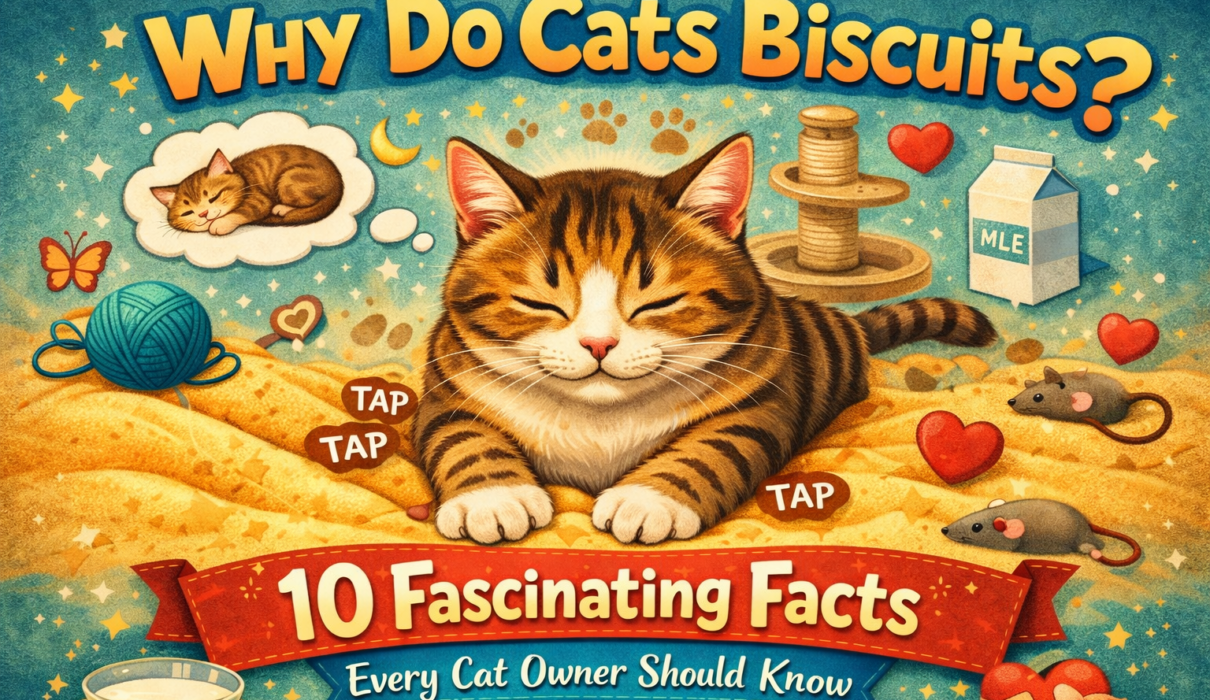
If you’ve ever relaxed on the couch only to have your cat climb onto your lap and start rhythmically pushing their paws in and out, congratulations you’ve been chosen as the dough. This behavior, often called “making biscuits,” is one of the most adorable, puzzling, and sometimes slightly painful things cats do. But why do cats make biscuits in the first place? Is it love? Habit? Some strange feline ritual passed down through generations?
The truth is, cat kneading is a deeply layered behavior rooted in instinct, emotion, and biology. While it might look silly (or feel like tiny needles digging into your legs), it’s actually one of the most meaningful ways your cat communicates comfort, safety, and connection. Some cats knead blankets. Others knead their humans. Some purr loudly while doing it, while others stare into the distance like they’re reliving a past life.
This article breaks down why do cats make biscuits into 10 fascinating facts, each revealing a different side of your cat’s inner world. By the end, you won’t just tolerate this behavior you’ll understand it, appreciate it, and maybe even feel honored when your cat starts baking on you.
Fact 1: It Starts in Kittenhood
Nursing Instincts and Survival
The most widely accepted explanation for why cats make biscuits begins at birth. When kittens are only days old, they instinctively knead their mother’s belly while nursing. This kneading motion stimulates milk flow, helping them feed more efficiently. It’s a built-in survival mechanism, hardwired into their tiny brains before they even open their eyes.
This action isn’t taught. No mother cat sits her kittens down for a lesson. It’s pure instinct. The repetitive motion, the warmth, the closeness—it all becomes associated with safety, nourishment, and comfort. Those early experiences leave a deep imprint on a cat’s nervous system.
Comfort, Warmth, and Milk Flow
Even after kittens are weaned, that comforting association doesn’t disappear. Instead, it evolves. Adult cats knead when they feel safe, relaxed, and emotionally secure. That’s why this behavior often shows up during moments of calm—before sleep, during cuddles, or when they’re feeling especially content.
So when you wonder why do cats make biscuits on your lap, remember this: your cat is tapping into the earliest, safest memory they have. In their mind, you’re warmth. You’re security. You’re home.
Fact 2: A Powerful Sign of Comfort and Happiness
Emotional Safety and Trust
Cats are selective with their trust. They don’t just knead anywhere or on anyone. When a cat makes biscuits near you, it’s a clear sign they feel emotionally safe in your presence. Their guard is down. Their instincts say, “This place is okay.”
Unlike dogs, cats don’t show affection loudly or obviously. Their love language is subtle. Kneading is one of the strongest indicators that your cat feels calm, content, and genuinely happy.
Why Cats Knead Their Favorite Humans
Ever notice how your cat chooses you over everyone else in the house to make biscuits on? That’s not random. Cats associate specific people with comfort and positive experiences. Your scent, voice, and presence trigger those deep-rooted feelings of security.
In simple terms, why do cats make biscuits on you? Because you make them feel good. It’s one of the highest compliments a cat can give.
Fact 3: Cats Make Biscuits to Mark Their Territory
Scent Glands in Paws Explained
Cats have scent glands in places you might not expect including their paws. When they knead, they release pheromones that mark objects, people, or surfaces as “theirs.” This marking isn’t aggressive. It’s more like a gentle claim of ownership.
Think of it as a silent message: “This is mine, and I like it here.”
Kneading as a Silent Claim
When your cat kneads your blanket, couch, or lap, they’re mixing affection with territorial behavior. It’s a fascinating combination—love and ownership rolled into one repetitive motion.
So if you’re wondering why do cats make biscuits on the same spot every night, it’s partly because they’ve already claimed it as their personal comfort zone.
Fact 4: It’s a Way to Prepare a Cozy Sleeping Spot
Wild Cat Instincts
Before cats lived in warm homes with plush beds, their wild ancestors had to make do with grass, leaves, and dirt. Kneading helped flatten surfaces, remove sharp objects, and create a comfortable place to rest.
That instinct hasn’t disappeared. It’s just been repurposed.
From Grass Beds to Blankets
Today, your cat doesn’t need to clear sticks from the forest floor but their brain doesn’t know that. When they knead blankets, pillows, or your stomach, they’re performing an ancient ritual designed to make a sleeping area just right.
This explains why why do cats make biscuits right before lying down. They’re literally prepping the bed, even if it’s already perfect.
Fact 5: Stress Relief and Self-Soothing Behavior
Kneading as Feline Therapy
Kneading releases endorphins feel-good chemicals that help cats relax. That’s why some cats knead during stressful situations, like after moving to a new home or when loud noises disrupt their environment.
It’s their version of deep breathing or stress eating.
When Biscuits Appear During Anxiety
If your cat starts making biscuits more frequently during changes or uncertainty, it may be their way of coping. The repetitive motion calms their nervous system and gives them a sense of control.
Understanding why do cats make biscuits during stressful moments can help you respond with patience rather than confusion.
Fact 6: A Sign of Deep Bonding and Affection
Why Your Cat Chooses You
Cats don’t knead strangers. They knead their inner circle. This behavior is reserved for those they trust deeply. When your cat makes biscuits on you, they’re expressing a bond that goes beyond casual affection.
It’s intimate. Vulnerable. Honest.
The Emotional Meaning Behind Painful Paws
Yes, it can hurt especially if claws are involved. But that discomfort comes from love. Your cat isn’t trying to harm you. They’re lost in a moment of emotional comfort.
That’s another key reason why do cats make biscuits matters so much. It’s not just cute it’s meaningful.
Fact 7: Hormones and Adult Cat Behavior
Kneading in Adult and Senior Cats
While kneading begins in kittenhood, many cats continue the behavior well into adulthood and old age. Hormones, memory, and emotional associations all play a role.
Neutered cats knead just as much as unneutered ones, which shows this behavior goes far beyond reproduction.
Is It Linked to Reproductive Instincts?
In some cases, female cats in heat may knead more frequently. However, this is only one small piece of the puzzle. The primary driver remains comfort and instinct.
So when asking why do cats make biscuits, hormones are a factor—but not the whole story.
Fact 8: Why Some Cats Drool While Making Biscuits
The Ultimate Comfort Combo
Some cats drool while kneading, purring, and closing their eyes. This combination indicates extreme relaxation. They’re so content that their muscles fully relax—including those that control saliva.
It may look odd, but it’s usually harmless.
When to Worry (and When Not To)
Occasional drooling during kneading is normal. Excessive drooling, especially without kneading, could indicate dental or health issues. Context matters.
Still, in most cases, why do cats make biscuits with drooling comes down to pure bliss.
Fact 9: Why Cats Knead Soft Things More Than Hard Ones
Texture Preferences Explained
Cats prefer soft textures because they resemble fur, grass, or warm bodies. Softness triggers those early kitten memories and encourages kneading behavior.
Hard surfaces just don’t hit the same emotional notes.
Blankets, Bellies, and Weird Choices
Yes, cats sometimes choose the most inconvenient places to knead. That’s because warmth, scent, and softness all factor into their decision.
Understanding why do cats make biscuits on specific textures helps explain their sometimes baffling choices.
Fact 10: When Kneading Might Signal a Problem
Obsessive or Pain-Related Kneading
In rare cases, excessive kneading can indicate anxiety, discomfort, or underlying health issues. If the behavior becomes compulsive or sudden, it’s worth paying attention.
Knowing the Difference Between Cute and Concerning
Healthy kneading is relaxed and rhythmic. Problematic kneading often looks frantic or tense. Knowing the difference helps you better care for your cat.
This final layer completes the answer to why do cats make biscuits—it’s usually normal, but awareness matters.
Conclusion: What Cat Biscuits Really Mean
So, why do cats make biscuits? Because it’s a beautiful blend of instinct, comfort, affection, memory, and emotion. It’s not random. It’s not silly. It’s a window into your cat’s emotional world.
When your cat kneads you, they’re saying, “I feel safe here.” And in the language of cats, that’s everything.
FAQs About Why Do Cats Make Biscuits
1. Why do cats make biscuits on people instead of blankets?
Because people provide warmth, scent, and emotional comfort that blankets can’t fully replicate.
2. Why do cats make biscuits and purr at the same time?
Both behaviors signal relaxation and happiness, often triggered together during moments of comfort.
3. Why do cats make biscuits with their claws out?
Claw extension is instinctual during kneading and usually not intentional or aggressive.
4. Why do cats make biscuits before sleeping?
It’s an instinctive way to prepare a comfortable resting spot, rooted in wild behavior.
5. Why do cats make biscuits more as they get older?
Older cats often seek comfort and routine, making kneading a soothing, familiar habit.
You should also read about Can Dogs Eat Blueberries?