

 By
By Why Suede Shoes Deserve Special Care
Suede shoes have a way of turning heads. They look soft, luxurious, and effortlessly stylish—like the leather version of a perfectly tailored jacket. But let’s be honest, owning suede shoes can feel a bit like babysitting a toddler dressed in white. One wrong step, one accidental splash, or one careless brush against a dusty surface, and suddenly your beautiful shoes look tired and stained.
That’s exactly why learning how to clean suede shoes properly is not optional—it’s essential. Unlike smooth leather, suede has a delicate, fuzzy texture that absorbs dirt, oil, and moisture faster than you can say “oops.” Many people ruin their suede shoes by treating them like regular footwear, scrubbing aggressively or using water without knowing the consequences.
The good news? Cleaning suede shoes doesn’t require expensive products or professional skills. With the right techniques and a little patience, you can make your suede shoes look fresh, clean, and almost new again. In this guide, you’ll discover 5 powerful tricks that work like magic, tested and trusted by shoe care experts and everyday suede lovers alike.
So before you toss those stained suede shoes to the back of your closet, take a deep breath. You’re about to learn exactly how to save them—and keep them looking amazing for years.
Understanding Suede: What Makes It So Different
To clean suede properly, you first need to understand what suede actually is. Think of suede as leather’s more sensitive sibling. While traditional leather uses the outer layer of animal hide, suede is made from the underside. This gives suede its signature soft, velvety texture—but also makes it more vulnerable to damage.
Because suede has an open, fibrous surface, it acts like a sponge. Dirt particles settle deep into the fibers, oils cling stubbornly, and water can leave permanent marks if not handled correctly. This is why regular cleaning methods that work on leather shoes can completely ruin suede.
Another key thing to know is that suede reacts badly to excessive moisture. Water can stiffen the fibers, darken the surface, and leave uneven stains once it dries. That’s why suede cleaning focuses more on dry methods, gentle brushing, and targeted spot treatments rather than soaking or scrubbing.
Understanding this difference changes everything. Once you stop treating suede like regular leather and start respecting its unique structure, cleaning becomes far less intimidating—and far more effective.
Common Mistakes People Make When Cleaning Suede Shoes
Before jumping into the magic tricks, let’s talk about what not to do. Most suede damage happens not because people don’t clean their shoes—but because they clean them the wrong way.
One of the biggest mistakes is using water too freely. Pouring water on suede or washing it under a tap may seem logical, but it often leads to water stains and hardened patches. Another common error is scrubbing aggressively with rough brushes or towels. This flattens the suede’s nap and makes the surface look worn and shiny.
Using household cleaners is another major no-no. Detergents, soaps, and chemical sprays can discolor suede or leave residue that’s nearly impossible to remove. Even baby wipes and “gentle” cleaners can cause lasting damage.
Lastly, many people ignore preventive care altogether. Wearing suede shoes in rain, snow, or muddy conditions without protection is basically inviting stains. Knowing these mistakes helps you avoid them—and sets you up for success as you learn the right way to clean suede shoes.
Essential Tools You Need Before Cleaning Suede Shoes
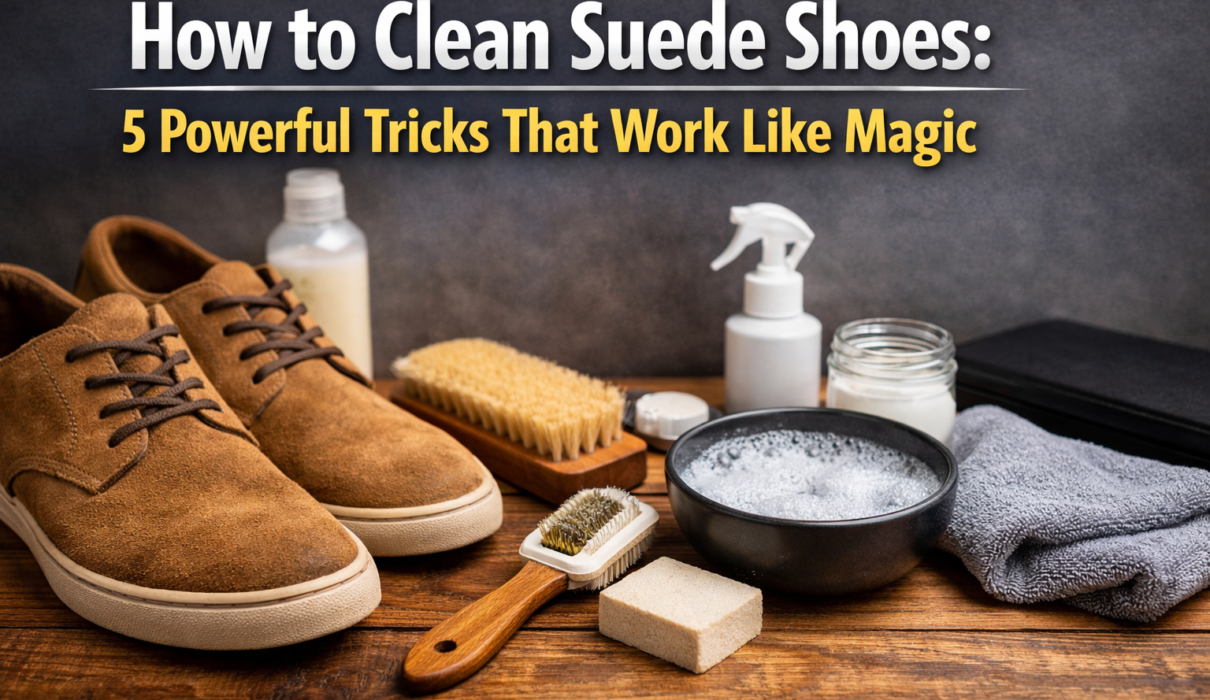
Cleaning suede shoes doesn’t require a toolbox full of fancy products, but having the right essentials makes all the difference. Think of these tools as your suede survival kit.
A suede brush is non-negotiable. This brush has soft rubber or brass bristles designed to lift dirt without damaging the fibers. It’s your first line of defense against dust, dried mud, and surface stains.
A suede eraser works like magic on scuffs and marks. It looks similar to a regular pencil eraser but is specifically designed for suede. For light stains, it can be surprisingly effective.
You’ll also want white vinegar or rubbing alcohol. These liquids evaporate quickly and help break down stubborn stains without soaking the suede. A microfiber cloth is essential for applying these solutions gently.
Optional but helpful tools include a shoe tree to maintain shape and a suede protector spray for long-term care. With these tools ready, you’re fully equipped to start cleaning suede shoes the right way.
Preparing Your Suede Shoes for Cleaning
Preparation is often overlooked, but it’s one of the most important steps when cleaning suede shoes. Rushing straight into stain removal without prepping the surface can actually spread dirt and make things worse.
Start by letting your shoes dry completely if they’re wet or damp. Never attempt to clean suede while it’s still wet—it’s much more vulnerable at that stage. Once dry, insert shoe trees or stuff the shoes with paper to help them hold their shape during cleaning.
Next, gently brush the entire surface using a suede brush. Always brush in one direction, not back and forth. This lifts loose dirt and restores the nap, giving you a clean canvas to work with.
Taking these few minutes to prepare your shoes makes every cleaning trick more effective and reduces the risk of accidental damage.
Trick #1: Dry Brushing – The Foundation of Suede Cleaning
If there’s one habit that will keep your suede shoes looking great, it’s regular dry brushing. This simple technique is the foundation of all suede care, and it works best when done consistently rather than occasionally.
Dry brushing removes surface dirt, dust, and minor stains before they settle deep into the fibers. Using a suede brush, gently stroke the surface in a single direction. This lifts the nap and prevents the suede from looking flat or shiny over time.
For stubborn areas, you can apply slightly more pressure, but never scrub aggressively. Think of it like brushing a delicate fabric rather than cleaning a kitchen floor. The goal is to refresh the texture, not grind dirt deeper.
Making dry brushing a weekly habit—especially if you wear your suede shoes often—can dramatically reduce the need for deeper cleaning later.
Trick #2: Suede Eraser Magic for Scuffs and Marks
Scuffs are inevitable, especially around the toes and heels. Thankfully, a suede eraser can work wonders. This trick feels almost too simple to be true, but it’s incredibly effective.
To use a suede eraser, gently rub it over the scuffed area using small, controlled motions. You’ll notice the mark starting to fade as the eraser lifts dirt and residue from the fibers. Be patient—rushing or pressing too hard can damage the suede.
After erasing, follow up with a suede brush to restore the texture and blend the cleaned area with the rest of the shoe. This step is crucial for keeping the surface even and natural-looking.
For light scuffs, this method often eliminates the need for any liquid cleaners at all.
Trick #3: Vinegar or Alcohol – The Secret Weapon for Stains
When dry methods aren’t enough, vinegar or rubbing alcohol becomes your secret weapon. These liquids are perfect for tackling stubborn stains like salt marks or unknown spots.
Dampen a microfiber cloth lightly—never soak it—and gently dab the stained area. Avoid rubbing, as this can spread the stain. As the liquid evaporates, it helps lift the stain without saturating the suede.
Once dry, brush the area gently to restore the nap. Don’t worry if the suede looks slightly darker at first; it usually returns to normal as it dries fully.
This trick is especially useful during winter when salt stains are common.
Trick #4: Steam Cleaning for Reviving Flattened Suede
Sometimes suede shoes don’t look dirty—they just look tired. The nap gets flat, shiny, and lifeless, especially in high-friction areas like the toe box or sides. This is where steam cleaning works like pure magic. Not the aggressive, soaking kind—but gentle steam that relaxes the fibers and brings suede back to life.
Steam works by loosening the compressed fibers without directly wetting the shoe. You can create steam by boiling water in a kettle or holding your shoes in a steamy bathroom after a hot shower. Keep the shoes at a safe distance—never directly over boiling water. The goal is to let the steam lightly kiss the suede, not drown it.
Once the suede feels slightly warm and relaxed, use a suede brush to gently lift the nap. Brush in one direction using slow, deliberate strokes. You’ll notice the texture starting to look soft and fuzzy again, almost like new. It’s incredibly satisfying.
This trick is perfect for shoes that look worn but aren’t heavily stained. Think of steam as a reset button—it refreshes texture, restores softness, and makes suede look luxurious again without harsh cleaning.
Trick #5: Cornstarch and Baking Soda for Oil Stains
Oil stains are suede’s worst enemy. A single drop of oil can spread quickly and leave a dark, stubborn mark. But don’t panic—your kitchen holds the solution.
Cornstarch and baking soda are natural oil absorbers. As soon as you notice an oil stain, sprinkle a generous amount directly onto the affected area. Don’t rub it in. Just let it sit. Ideally, leave it overnight so it has enough time to absorb the oil from the suede fibers.
The next day, gently brush off the powder using a suede brush. You may need to repeat the process for deeper stains, but patience pays off here. Each application pulls more oil out of the suede.
This method works best when used quickly, but even older oil stains can improve significantly with repeated treatments. It’s proof that sometimes the simplest solutions are the most powerful.
How to Clean Suede Shoes After Water Damage
Water stains on suede can look intimidating, especially when they leave dark rings or uneven patches. Ironically, the solution often involves using more water—but in a controlled way.
Start by lightly dampening a clean microfiber cloth with water. Gently dampen the entire surface of the shoe evenly. This helps blend the water stain into the rest of the suede, preventing harsh lines. Never soak the shoe—uniform moisture is the key.
Once evenly damp, let the shoes air-dry naturally. Avoid heat sources like hair dryers or radiators, which can harden the suede. Stuff the shoes with paper to maintain their shape while drying.
When fully dry, brush the suede gently to restore the nap. This method may feel counterintuitive, but when done correctly, it’s one of the most effective ways to fix water stains and restore a uniform appearance.
How to Restore Color and Texture to Old Suede Shoes
Over time, suede shoes can fade, losing their rich color and plush texture. The good news? You don’t have to replace them—you can revive them.
Start with a thorough dry brushing to remove surface dirt. Next, use steam to lift flattened fibers, as discussed earlier. This alone can dramatically improve appearance.
For color restoration, suede renovator sprays are your best friend. Choose a color that matches your shoes exactly. Apply the spray lightly and evenly in a well-ventilated area. Multiple light coats are better than one heavy application.
After the spray dries, brush the suede to blend the color and restore softness. The result? Shoes that look refreshed, vibrant, and well cared for—without looking artificially painted.
Protecting Suede Shoes: Prevention Is Better Than Cleaning
If cleaning suede feels like work, prevention feels like freedom. One simple habit can save you hours of effort: using a suede protector spray.
A good suede protector creates an invisible barrier that repels water, dirt, and stains. It doesn’t make suede waterproof, but it gives you precious reaction time when accidents happen. Apply it to clean, dry shoes and reapply every few weeks if you wear them often.
Also, be mindful of when you wear suede. Rainy days, muddy environments, and crowded events are not suede-friendly. Rotating your shoes and storing them properly in a cool, dry place goes a long way.
Think of prevention as insurance. A little effort upfront keeps your suede shoes looking flawless long-term.
How Often Should You Clean Suede Shoes?
There’s no one-size-fits-all answer, but a simple rule works well: clean lightly and often, deeply only when needed.
Dry brushing should be done every few wears, especially if you walk outdoors. Spot cleaning can be done as soon as stains appear. Deep cleaning methods—like steam or vinegar treatments—should be reserved for visible issues.
Overcleaning can wear down suede just as much as neglect. Gentle, regular maintenance keeps the fibers healthy and extends the life of your shoes.
Caring for Different Types of Suede Shoes
Not all suede shoes are created equal. Sneakers, boots, loafers, and heels all experience different levels of wear.
- Suede sneakers need frequent brushing due to daily use
- Suede boots benefit from regular protection sprays
- Suede loafers require careful toe-area maintenance
- Suede heels need gentle handling to avoid scuffing
Adjust your cleaning routine based on how and where you wear your shoes. The more personalized your care, the better the results.
When to See a Professional Suede Cleaner
Sometimes, DIY just isn’t enough. Deep-set stains, severe water damage, or expensive designer shoes may require professional care.
Professional suede cleaners use specialized tools and solutions that aren’t available to consumers. If your shoes are valuable or sentimental, it’s worth the investment.
Knowing when to stop is just as important as knowing how to clean.
Conclusion: Keep Your Suede Shoes Looking Brand New
Suede shoes don’t have to be high-maintenance nightmares. With the right knowledge, tools, and habits, they can be just as practical as they are stylish. Learning how to clean suede shoes properly empowers you to handle stains, scuffs, and wear with confidence.
From dry brushing to steam revival, each trick plays a role in keeping your suede shoes looking fresh and luxurious. Treat suede with respect, stay consistent with care, and your shoes will reward you with years of standout style.
FAQs
1. Can I use water to clean suede shoes?
Yes, but sparingly and evenly. Never soak suede—controlled moisture is key.
2. What household items clean suede best?
White vinegar, rubbing alcohol, cornstarch, and baking soda work wonders.
3. How do I remove bad smells from suede shoes?
Sprinkle baking soda inside overnight, then shake it out.
4. Can suede shoes be worn in rain?
It’s best to avoid rain, even with protector spray applied.
5. How long do suede shoes last with proper care?
With good maintenance, suede shoes can last many years.
Also read about how to clear iphone cache